


Examples of Emotional Intelligence:A New Paradigm
Emotional intelligence means to be smart with feelings and examples of emotional intelligence are:
- being able to recognize and manage your emotions appropriately
- being able to recognize and effectively deal with others’ emotions
- being able to motivate yourself and maintain successful relationships
In short, emotional intelligence is the skill of perceiving, understanding, and effectively managing emotions like anger, happiness, anxiety, optimism, humor, sadness, fear, shame, love.
So, what does it have to do with you?
A lot. In the business world, these examples of emotional intelligence separate top achievers from the rest of the pack. In your personal life, they contribute in a major way to your health and quality of life, to your happiness, to the quality of your relationships and to living on purpose.
 Believe it or not, this set of skills is the single most important factor in your success.
In fact, research has shown that success is 80-90% attributable to emotional intelligence (EI), and only 10-20% to cognitive intelligence (IQ) – whether in your personal life or at work.
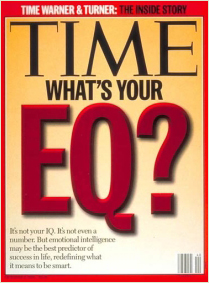
Time magazine picked it up too: “What’s Your EQ? It’s not your IQ. It’s not even a number. But emotional intelligence may be the best predictor of success in life, redefining what it means to be smart.” (Read full story here).
If you lived on a deserted island for the last decade, you might wonder what all the fuss is about the emotional intelligence quotient (EQ), emotional intelligence test, and so on.
Well, you should know that these became important buzzwords in the business world after Daniel Goleman released his groundbreaking book“Emotional Intelligence” in 1995.
The basis of his book was solid emotional intelligence research that demonstrated how IQ, the conventional measure of intelligence in the last decades, was too narrow as a predictor of success.
It’s now common knowledge that not only most jobs, but most relationships are lost because of low emotional intelligence.
The studies show that there’s a special kind of smarts, which includes traits as empathy and social skills. One of the best examples of emotional intelligence is a charismatic CEO who inspires his employees and builds teamwork. Or, a parent that’s an inspiring role model.
What you didn’t realize, is that EI or your skill of being aware of, controlling your own emotions and managing those of others is now highly valued by large companies all over the world. They look for “emotionally intelligent” people to fill human resources, sales, customer service, training, and top management positions.
Examples of emotional intelligence are looked for to predict which of two people with a similar experience and educational background ends up being the rising star on the leadership fast track. Nowadays, it’s commonly accepted that in top management, a high IQ is a basic criterion, but a high EIQ determines which one breaks away from the pack. Why?
Because emotional intelligence determines smart decision-making and the ability to bring out the best in people – and these translate to impressive bottom-line results.
You’d better believe it.
Your expertise, your professional skills, your degree(s), just aren’t enough in today’s super-competitive workplace.
As emotional intelligence was proven to drive educational achievement, fulfillment in life and professional success, EQ tests are now being administered in schools and emotional intelligence skills are taught early on. Examples of emotional intelligence put forth to kids include the concepts of personal responsibility, compassion, self motivation, conflict resolution, decision-making and effective group communication.
One of the best references on strategies and examples of emotional intelligence is the “Emotional Intelligence Quick Book”, which spells out the EI concept in easy language. It shows you how to use simple techniques for building self confidence, setting and achieving goals in easier and more satisfying ways, enhancing your relationships as a role-model parent and an inspiring partner.
Based on findings drawn from interviews with more than half a million people, the “EI Quick Book” is an effective resource to help you improve your EQ and become more successful at work. It provides specific skill-building techniques to develop resiliency, adaptability, cooperative teamwork and tips for stress management to increase productivity, make you a better manager and employee.
It’s brilliant.
Understanding and adopting these powerful examples of emotional intelligence is one of the most important steps to self improvement, which is vital to achieving your fullest potential. Once you use this approach, you simply can’t fail!



Pingback: Emotional Intelligence – Site Title